Pet health · Medical care at home
Subcutaneous Fluids for Pets: What to Expect
If your vet has prescribed fluids under the skin for your cat or dog, here’s what they do, why they’re so common with kidney disease, and how we help when you’re away.
Quick answer
Subcutaneous (sub-Q) fluids are sterile fluids, prescribed by your vet, that go into the space just under your pet’s skin. The body absorbs them over the next few hours. Vets most often prescribe them for cats and dogs with chronic kidney disease, who have a hard time staying hydrated. Your vet chooses the fluid, the amount and the schedule, and their team shows you how to give them. When you travel, our sitters are trained to give sub-Q fluids exactly as your vet prescribed.
At a glance
When your vet says your pet needs fluids “under the skin,” it can be a lot to take in. Needles, a fluid bag, tubing. Most people picture a vet hospital, not their own living room.
I’m a certified veterinary technician, with a B.S. in Veterinary Technology from Quinnipiac University. Sub-Q fluids are one of the medical treatments I train our sitters to give. So here’s a plain-language look at what sub-Q fluids are and what to expect. Your own vet’s instructions always come first.
The basics
What sub-Q fluids are
“Subcutaneous” just means under the skin. Instead of going into a vein, like an IV at the hospital, the fluid goes into the loose space under the skin, often at the shoulder blades or near the hips. From there, the body soaks it up gradually.
VCA Animal Hospitals explains that a soft lump forms under the skin while the fluid runs in, and it’s absorbed over the next few hours. Sometimes gravity pulls the fluid down along the side of the body, or even into a leg, before it’s absorbed. That can look strange, but VCA says it isn’t painful.
Sub-Q fluids are a prescription treatment. Your vet picks the type of fluid and the amount based on your pet’s condition. Never swap in a different fluid or change the amount without talking to your vet.
The reason
Why vets prescribe them
Home fluid therapy is most commonly recommended for cats and dogs with chronic kidney disease, according to VCA. It’s a big deal for cats in particular. Cornell’s Feline Health Center says chronic kidney disease affects up to 40% of cats over age 10 and 80% of cats over 15.
Kidneys help the body hold on to water. The Merck Veterinary Manual explains that as kidney disease progresses, pets lose some of that ability, and nausea or a reluctance to drink can make things worse. Cornell adds that dehydration can speed up kidney damage and make a cat feel sicker.
Not every pet with kidney disease needs sub-Q fluids. Merck says hydration can often be helped first with canned food, several sources of fresh water, and water or low-sodium broth added to food. Cornell notes that many cats like drinking from fountains. Sub-Q fluids usually come in when those steps aren’t enough, often in the later stages. Your vet will tell you which steps are right for your pet.
The schedule
How often, and how much
There’s no single schedule. It depends on your pet and how their condition changes over time. For cats with kidney disease, Cornell says many owners learn to give fluids at home every one to three days with their vet’s guidance. Other pets need them more often. The dog in the story below got fluids twice a day.
The Merck Veterinary Manual notes that cats in the later stages of kidney disease usually see their vet every one to three months, so expect the plan to be adjusted along the way.

At home
What a session looks like
Your vet team will walk you through the steps in person. That hands-on lesson matters more than anything you read online. To give you a feel for it, here’s the general picture VCA describes for the fluid-bag method:
- A calm spot. A table, a countertop or your lap, somewhere you can both stay comfortable for about 5 to 10 minutes.
- The bag hangs up high. The fluid bag is hung about 3 feet above your pet so the fluid flows down the tubing.
- Body-temperature fluids. Fluids that are too cold or hot can be uncomfortable. VCA suggests warming the bag in a water bath and checking it on your wrist. Don’t refrigerate it.
- A distraction helps. A creamy treat, or someone rubbing your pet’s head and neck, keeps their focus off what you’re doing.
- A fresh needle every time. Used needles go in a sharps container. Ask your vet how to dispose of it.
- Check the bag. If the fluid ever looks cloudy or discolored, don’t use it. VCA warns it may be contaminated.
VCA also notes that cats may seem nervous the first few times, but most are comfortable by the fourth or fifth session.
From our blog
A story from our team
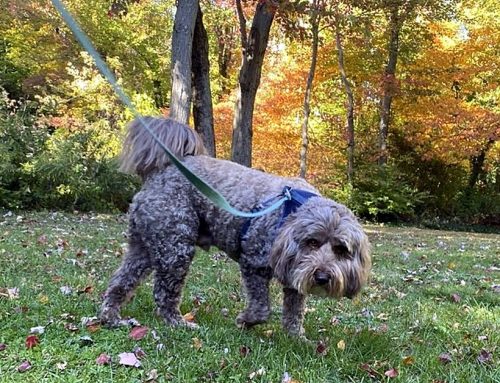
Back in 2013, one of our sitters wrote the first version of this post. She cared for a dog with kidney disease who already took a pill and a liquid medication at every visit. Then his vet decided he needed sub-Q fluids twice a day to keep him from getting dehydrated.
I asked our team if anyone wanted to learn, and she volunteered. With the owners’ permission, I taught her over three lessons. She admitted she was nervous. She’d never given an injection to a person or an animal. My advice to her was the same thing I’d tell you: stay calm and don’t overthink it.
The dog sat quietly on his blanket for the 10 minutes or so it took, then went outside and rolled in the grass. Her favorite part? His family could travel knowing he wouldn’t have to stay overnight at the vet hospital just to get his fluids.
Medical pet sitting
When you’re away
I train all of our sitters to give oral medications, insulin injections and subcutaneous fluids. These medical services are given or closely overseen by me, and our team keeps careful records for every pet with medical needs. You can read more, including fees, on our medical pet sitting page.
If your pet gets sub-Q fluids, tell us at your meet & greet. It helps to have ready:
- Your vet’s written instructions: the fluid, the amount and how often
- Your supplies, plus enough needles for every dose while you’re gone
- Your vet’s name and number, and an emergency vet you trust
- What works for your pet: their favorite spot, treat or position
For pets who need medication or extra checks, more visits can make sense. You can read about our cat sitting visits and how we care for older dogs at home.
Follow your vet. If something seems off, or doesn’t match what your vet told you to expect, call your vet. Our sitters give fluids as prescribed. They don’t change the plan.
FAQ
Common questions
Do sub-Q fluids hurt?
VCA notes that most cats tolerate fluids quite well, that body-temperature fluids are more comfortable, and that the soft lump afterward is normal. If your pet seems to be in pain, talk to your vet.
Can I just get my pet to drink more instead?
Sometimes that’s the first step. Merck lists canned food, plenty of fresh water and adding water or low-sodium broth to food. But some pets can’t drink enough to keep up, and that’s when vets add fluids. Ask your vet before changing anything.
Can your sitters give sub-Q fluids?
Yes. I train our sitters to give sub-Q fluids, insulin injections and oral medications, always following your vet’s instructions. Ask us at your meet & greet.
Our team is based in Cheshire and cares for pets at home in Southington, Wallingford, Hamden, North Haven, Meriden and New Haven. You can see the whole service area in one place.
Traveling with a pet who needs fluids?
Tell us about your pet’s care plan, and our office will reach out to set up your meet & greet.
Get Startedor call or text 203-439-0456
Sources (checked Nov. 25, 2026): Cornell Feline Health Center, Chronic kidney disease; Merck Veterinary Manual (cat owners), Noninfectious diseases of the urinary system of cats; Merck Veterinary Manual, Renal dysfunction in dogs and cats; VCA Animal Hospitals, Subcutaneous fluid administration in cats; VCA Animal Hospitals, Subcutaneous fluid administration in dogs. This post is general information, not veterinary advice. Always follow your veterinarian’s instructions for your pet.










Hi Annie, Thanks for your bravery as this is a great story! This is further confirmation that a service such as Sarah’s Pet Sitting is truly needed in our community because you never know as an owner, if you will require such special services. Thanks for all you do!