Dog Care Guide · Family & Home
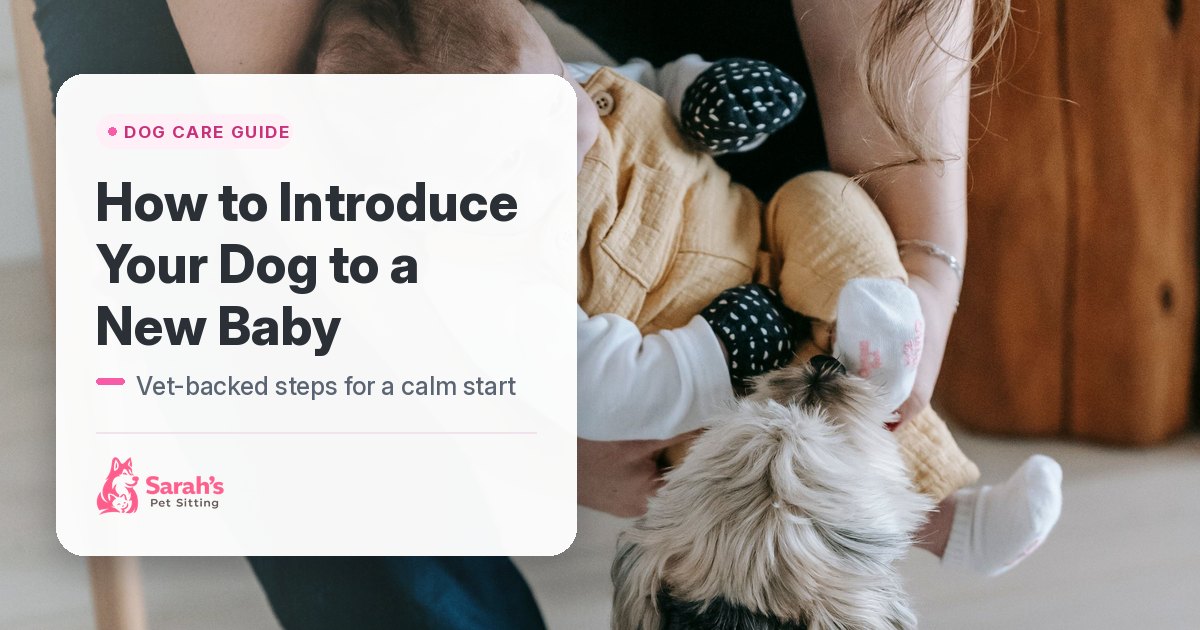
How to Introduce Your Dog to a New Baby
How I’d introduce your dog to a new baby: getting her ready before your due date, that first hello, and keeping everyone safe once the baby is home.

Quick answer
Start getting your dog ready a few months before your due date. Brush up on the basics, bring in baby sounds, smells and gear a little at a time, and make any routine or house-rule changes early. On homecoming day, say hi to your dog first, then keep the first meeting short, calm and on a leash. And the big one: never leave your dog and baby alone together, not even for a minute.
A new baby changes everything at home, and your dog feels it too. New sounds, smells, a new schedule and less of your attention can be a lot, especially for a dog who’s been the only “kid” for years. The ASPCA makes the same point, and what looks like jealousy is often just stress.
Our walkers spend their days with dogs in Cheshire and nearby towns, so routines are kind of our thing. Here’s what I’d tell a neighbor who’s expecting. Every dog is different, so if you’re worried about yours, check in with your vet.
Step 1 · Prepare
Before the baby arrives
Start early
Around four months before the baby arrives, start bringing in baby sights, sounds and smells, and pair each one with treats. About one to two months out, start shifting your dog’s day toward what it’ll look like later.
Schedule a vet visit
Book a checkup before the baby comes so vaccines and parasite prevention are current. The vets at UC Davis suggest jotting down a few days of notes on her behavior first. If she already mouths, nips, snaps, growls or jumps when stressed, work on it now with your vet or a veterinary behaviorist.
Brush up on the cues you’ll rely on
You want a dog who listens when your hands are full:
- Sit, down, stay and settle, like lying down whenever you sit in your nursing chair
- Leave it and drop it for baby things
- Four paws on the floor, since a jumping dog is a real hazard when you’re holding the baby
- Relaxing in a crate and coming when called
- “Go away,” a cue to move away from you or the baby, which gives a nervous dog an option besides growling
A basic obedience class is a great head start, and our 6 exercises to teach your dog self control are good practice at home. One handy drill: lay a towel on the floor like you’re changing a diaper (a baby doll makes it realistic) and reward her for staying put until you call her.
Introduce baby sights, sounds and smells
- Gear. Unpack the car seat, swing, crib and high chair early, a couple at a time, so they’re old news by homecoming. If something swings, rocks or plays music, turn it on and off a few times so she gets used to it. If she grabs a baby item, swap in one of her toys.
- Sounds. Play a baby crying recording in 5 to 10 minute sessions with treats. Start quiet if she seems worried.
- Smells. Wear a little of the baby’s lotion so the new scent comes with someone she loves.
- The stroller. Walk her next to the empty stroller now, slowly and on leash, and work on loose-leash walking before there’s a baby in it.
Set up gates, safe spaces and new rules
Any rule that will change, like no more couch or a new place to sleep, is easier to teach now. If the nursery will be off-limits, teach a stay at the door and use a closed door or tall baby gate the rest of the time.
The AKC trainers call these “success stations”: comfy spots behind a gate or in a crate where she can relax with a good chew whenever you can’t watch her with the baby.
Practice the new routine
Start shifting walk and meal times now if they’ll change. As tempting as it is, don’t shower her with extra attention in the last few weeks. Short, scheduled cuddle sessions work better. If she’s glued to one of you, have someone else take over more walks and meals.
The ASPCA also suggests lining up a dog walker for the first few weeks and starting a few walks before the baby comes. That’s exactly what we do. If you’re hiring a pet sitter or dog walker, meet them a month or two before your due date. Our weekday dog walks and pet sitting visits keep her routine steady while you focus on your newborn.
Make a plan for the hospital stay
Have a dog plan ready well before your due date, and pick whatever will be least stressful for her.
Whether you’re delivering at Yale New Haven Hospital or MidState Medical Center in Meriden, decide who will let your dog out, feed her and keep her company. We can cover walks and drop-in visits while you’re away, or stay over with overnight pet sitting so she isn’t alone at night. Some parents also have the dog stay with a familiar relative for the first day or two after the baby comes home.
Step 2 · Meet
The first introduction
First impressions count, so keep your dog’s first meeting with your newborn calm and pleasant:
- Send a scent home first. Have someone bring home a blanket or piece of the baby’s clothing from the hospital for her to sniff.
- Greet your dog first. She’ll be thrilled to see you. Let someone else carry the baby while you give her a proper hello.
- Have two adults and a leash. One adult holds the leash, even if you don’t expect trouble. Keep treats by the door.
- Stay calm. Dogs pick up on our nerves.
- Pick a quiet room and sit down with the baby. If she looks relaxed, your helper can walk her closer on a loose leash.
- Keep it short. A couple of seconds sniffing the baby’s feet, then a sit, a treat and a new chew.
- Never force it. If she’s too excited or seems scared, calmly walk her away. No scolding.
- More than one dog? Introduce them to the baby one at a time, and praise calm behavior.
Step 3 · Settle in
Daily life with your baby and your dog
- Make the baby mean good things. Treats and attention happen when the baby is around. When you feed the baby, feed her too.
- Set up quiet time. Keep a mat by your feeding chair with a chew for her. Our guide to teaching your dog to go to a mat helps.
- Keep up the exercise and attention. She still needs plenty of both.
- Give her an escape route. She should always be able to get away, like into another room.
- Watch closely once the baby starts moving. Many dogs first get anxious once babies start crawling.
- Separate them at mealtimes. A dog going for a dropped bite can bump a child by accident.
Safety
Safety rules that never change
Body language
Warning signs to watch for
Dogs usually tell us they’re uneasy long before they growl, and a worried dog won’t always walk away. So watch for:
- Lip licking or yawning when she isn’t tired, turning her head away, or ears pinned back
- Whale eye (the whites showing) or a low, tucked tail
- Panting, pacing, trembling or hiding
- Freezing or going stiff. A suddenly rigid dog is scared and may bite if things keep going.
- Growling, showing teeth or snapping. She’s telling you she wants it to stop.
- Staring, chasing or obsessively searching for the baby, or avoiding the baby
If you see these signs, calmly send her to her bed or crate with a chew. Don’t punish growling. A growl is her warning system. Punish it and she may learn to skip the warning and go straight to a bite.
Getting help
When to call your vet or a veterinary behaviorist
- Before the baby comes, if your dog already shows stress, anxiety or any aggression.
- Right away, if your dog shows any aggression toward the baby, or you think she might. Keep them apart at all times until you’ve gotten professional help.
- If she avoids or fears the baby, or anything about it makes you uneasy. Keep them apart and call your vet.
Start with your regular vet, since pain, itching and illness can all make a dog more anxious. For bigger worries, ask about a board-certified veterinary behaviorist, a vet who specializes in behavior. Look one up in the ACVB “Find a Diplomate” directory. Vets can only call themselves behaviorists after board certification, but trainers and others aren’t held to that, so ask about credentials.
Newborn weeks
A little help during the newborn weeks
Those newborn weeks are a blur, and it’s normal for walks and playtime to slip. That’s where we come in, with dog walks, drop-in visits and overnight pet sitting in Cheshire, Southington, Wallingford, Hamden, North Haven, Meriden and New Haven.
New to us? You’ll meet someone from our team before your first service, so get set up before your due date. See our service area and Services & Pricing, or read why local families choose Sarah’s Pet Sitting.
FAQ
Dogs and new babies FAQ
When should I start preparing my dog for a new baby?
About four months ahead for baby sights and sounds, and one to two months ahead for routine changes.
Should my dog meet the baby right away?
Either way is fine if you plan it: quiet room, leash, a helper, treats, and keep it short.
Is my dog licking the baby a sign of love?
Not necessarily. Licking, sniffing and mouthing are how dogs explore and can be a sign of stress, so it’s best not to allow it.
My dog is gentle. Can I leave them together for a minute?
No. Never leave any dog alone with a baby, no matter how sweet.
Should I correct my dog for growling at the baby?
No. Calmly separate them and get professional help. Punishing a growl takes away her warning.
Expecting? Let’s keep your dog’s routine on track.
Tell us about your dog and your due date, and we’ll help you plan walks or visits for the newborn weeks. You’ll meet someone from our team before your first service.
Get Startedor call or text 203-439-0456
Sources: ASPCA: Dogs and Babies; American Kennel Club: Ask Our Trainers: How Can I Keep My Baby Safe Around the Dog?; American Kennel Club: Expecting a New Human Addition; UC Davis School of Veterinary Medicine: Baby Introduction: A Step by Step Guide; Ohio State University Indoor Pet Initiative: Introducing Your Dog to Your New Baby; Tufts Cummings School of Veterinary Medicine: Anxiety in Dogs; American College of Veterinary Behaviorists: What Is a Veterinary Behaviorist?; Penn Vet: Dog Body Language Basics (PDF). This article is general information and isn’t a substitute for advice from your veterinarian.